

You ever notice how some people have unlimited ideas while others never know what to create?
They never seem to run out of mental energy or creative stamina. They work like absolute professionals and create consistently. Whatever they consume (books, movies, novels, comics), they turn into tangible creations and deep conversations.
Their output makes it feel like their brain is constantly exploding with new thoughts. Ideas after ideas. DO THEY NOT FORGET THEMMM??? Are these people magicians? Are they God’s favorite children, or were they just born with raw talent?
I used to be so frustrated facing the blank page. I would sit there watching the cursor just blinking on the screen, waiting for me to type something. Even a single word. But nothing would come out. You know that feeling when you desperately want to create something, but you have no idea what to make? And then that creeping feeling kicks in. The Creative Friction.
These people live as creators instead of just occasionally “doing creativity.” They make creativity and creation a permanent part of their default operating system.
Driven by this frustration and desire, I set out to find the exact pieces that make these people MAGICIANS.
The Centuries Old Secret Of The Greats
“We should hunt out the helpful pieces of teaching and the spirited and noble-minded sayings which are capable of immediate practical application–not far far-fetched or archaic expressions or extravagant metaphors and figures of speech–and learn them so well that words become works.”
~ Seneca
What I found is a centuries-old practice called the Commonplace Book. This was the source of “creative firepower” for highly influential people like Leonardo da Vinci, Marcus Aurelius, Ralph Waldo Emerson, Taylor Swift, Eminem, Ryan Holiday, Austin Kleon, and many more.
A Commonplace Book is basically a second brain. It is a place where you dump absolutely everything that comes to your mind. Quotes, thoughts, observations, ideas, lessons, stories, and random sparks before they disappear. The entire purpose of this book is to record and organize these gems for later use in your life, your business, your writing, your speaking, or whatever it is that you do.
There is even research showing that physically writing things down improves your processing and retention. Your brain stops treating ideas like temporary noise and starts treating them like something valuable enough to save.
“Keep a notebook. Travel with it, eat with it, sleep with it. Slap into it every stray thought that flutters up into your brain. Cheap paper is less perishable than gray matter. And lead pencil markings endure longer than memory.”
~ Jack London
The people with “unlimited ideas” are not magically more creative.
They just do not trust their brain to remember everything.
So instead of waiting around for inspiration, they build systems that catch it before it disappears.
The Problem With “Dump Everything Into One Place”
Today, we are basically natural-born cyborgs. We have phones, digital notebooks, and AI tools that let us visualize ideas and expand prototypes instantly. But none of that matters if you do not capture the idea properly in the first place.
A lot of creators will tell you to just dump everything into one giant digital notebook.
I completely disagree.
That creates clutter. I know because I lived through that exact system. I used to paste every thought, every quote, and every idea into one massive place. Eventually, it became completely unusable. I could not find anything.
Capturing without organizing is just digital hoarding.
People fundamentally misunderstand Commonplace Books. They think great thinkers simply dumped everything into random notebooks forever. That is false. Yes, they captured everything quickly. But later, they categorized, reorganized, connected, and refined those ideas.
Organization is part of thinking. Without organization, capturing becomes chaos, and chaos becomes overwhelm.
That is exactly why I built a complete system that allows me to capture, organize, connect, and retrieve ideas frictionlessly.
And that is exactly what I am going to show you how to do next.
(You can skip the next section and go directly to my “Capture and Organize” System, if you don’t want to learn the “COOL” science behind how our mind works and how do we actually conceive ideas (curious? Read on. I have put a lot of time into this. PLEASEEE).
Another reason I highly recommend you read this is because it will help you understand how important having a capturing and organizing system really is. It will show you exactly how history’s greatest artists relied on this particular system to create everything you LOVE: The Art.
Okay. Let’s begin.)
“Your Brain Is For Having Ideas, Not Holding Them” – Why and How?
David Allen said it best: your brain is for having ideas, not holding them.
You might have heard this notion a thousand times, but there is actual scientific evidence behind it.
Think of your mind like the temporary workspace of a computer (Mental RAM). Just like a computer, you have a strictly limited amount of mental space to operate with at any given moment. Your brain cannot permanently hold every single piece of information in its raw form. Every second, it is constantly filtering, rearranging, and deleting information just to keep you from getting overwhelmed.
All of this constant background juggling creates a massive Cognitive Load and max out your Mental RAM. If you do not have an external place to store your thoughts, your brain will simply delete your best ideas to make room for new ones.
But you cannot afford to let them get deleted, because…
“Inspiration is Perishable”
When you have an idea, and you do not immediately work on it, it disappears.
It is not that you have to work on that thought from start to finish right then and there. But when you have an idea, you also have a certain energy attached to it. That excitement matters.
If you suddenly get excited about a game idea, a video concept, or something you want to write about, you have to capture it immediately. Because inspiration is highly perishable. (Don’t worry, we’ll talk about how to store that excitement so that you can work on it whenever you want.)
When you capture the idea, you capture it with the exact same emotional energy it was born with. When you revisit that note later, you reconnect with that original emotional state.
And once you lock that idea down externally, your brain does something incredible. It goes hunting for more.
The Reticular Activating System (RAS)
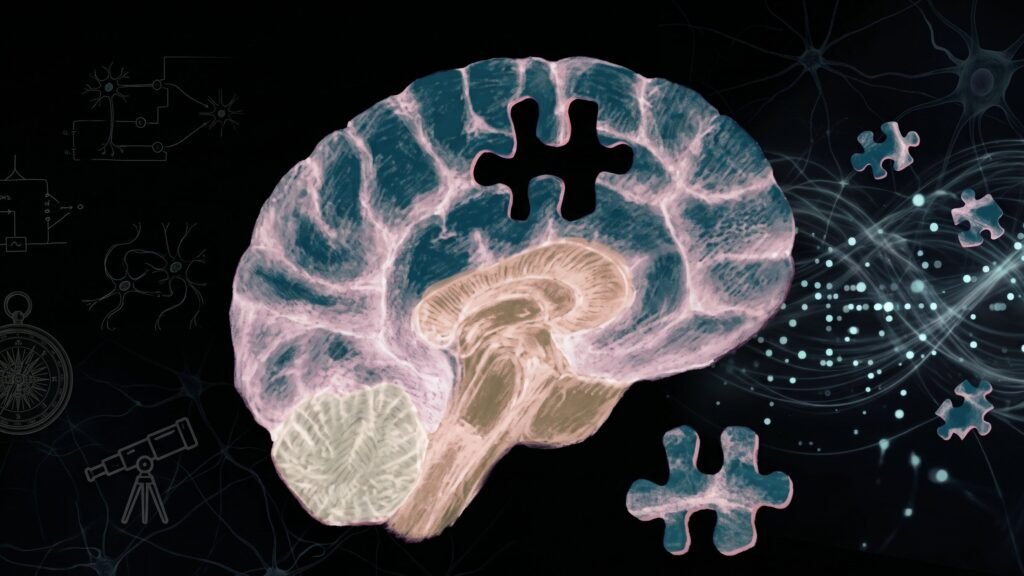
This is where the Reticular Activating System (RAS) kicks in.
When you actively capture an idea, you are basically telling your brain, “This thing is important. Pay attention to it.”
The RAS is why you can sleep through a loud siren outside but wake up instantly if someone whispers your name. It prioritizes information based on your personal focus. It is why you suddenly see a specific car everywhere right after you decide you want to buy it.
The information was always there. Your attention was not.
When you document a thought, your RAS starts highlighting opportunities, patterns, and connections in the real world that you would have otherwise completely tuned out. It turns your brain into a heat-seeking missile for your interests.
Capturing one idea trains your brain to find ten more.
Building Creative Firepower
And all those ideas compound into something massive: This is how you build your “CREATIVE FIREPOWER”.
When your RAS is constantly feeding your external system, you drastically increase your number of shots. You increase your creative options and your probability of success. Even the “dumbest” thoughts you ignore today might become a business, a video, or a breakthrough tomorrow. That is why nothing should be ignored.
Creation begins long before you sit down to work. It happens while you observe, while you capture, and while your brain silently connects the dots.
The Invisible Architecture of Genius
This is the secret the greats knew all along.
Creation is not magic. It is a biological workflow.
You use an external system to offload your Cognitive Load. That allows you to preserve the perishable energy of Inspiration. Because you wrote it down, you program your RAS to find more pieces of the puzzle. And all those pieces combine to give you unlimited Creative Firepower.
Those people you thought were magicians? The ones who never run out of ideas? They are just running this exact system in the background. They capture life so they can see more of life.
Here’s My Capture and Organizing System
“An intellectual is someone whose mind watches itself.”
~ Albert Camus
The Anatomy of a Idea: A fleeting thought > Saved inside a commonplace book (📍YOU ARE HERE) > Attention Poured In > Rough Idea > Research and Observation and Honest Thoughts > Organized > MINI ESSAY > Distilled > PERMANENT NOTES > Collection of Permanent Notes + more research and Arguments and a actionable bomb filled with AHA MOMENTS > Creation!
Like I said, I don’t DUMP Everything in a single page. I maintain specific places for specific things so that I don’t waste my time finding them and everything stays as streamlined and efficient as possible.
THE ULTIMATE RULE FOR CAPTURING: If it made you pause, save it. We are basically making a home to capture everything that grabs your attention because Inspiration is perishable.
“Nothing so much assists learning as writing down what we wish to remember.”
~ Cicero
1. Capturing and Organizing My Quick Fleeting Thoughts:
Let’s start with how I capture quick, fleeting thoughts before they vanish.
If I am out and do not have my PC, I use my phone’s default Notes app or the Obsidian mobile app.
*Note: Whatever I capture on my phone, I immediately WhatsApp to myself. I only organize things once I am sitting at my PC. This rule applies to absolutely everything I capture.*
When I am already at my PC, any quick ideas, random thoughts, or interesting quotes go straight into The Queue.
The Queue is essentially my digital commonplace book. I used to maintain this in Notion, but I have fully shifted to Obsidian. It is the dumping ground for anything that does not belong in a dedicated project folder but is too interesting to lose.
The Queue is the place where I’ll dump anything and everything that cannot go into dedicated folder. This is my commonplace book which I used to maintain on Notion but now I have shifted to Obsidian. Quotes. Ideas. Quick Thoughts.
- Organization: NO FOLDER
(“No Folder” means they are already organized. No further organization is needed)
2. Capturing “CREATION” Ideas:
Whenever I get a specific thought or idea that I can actually use for my own content, it goes directly into my Content Ideas page.
This page is also where I save any outlier ideas or high-performing content I stumble across while surfing the internet. If I really like a piece of content and want to study or reverse-engineer it later, it lives here.
- Organization: CONTENT STRATEGIES folder.
3. Capturing “Intentional Consumption” Curiosity:
A lot of times, right in the middle of creating something, I will come across a research paper, an article, a book, or a new concept that is directly related to the project I am working on.
Instead of breaking my flow and deviating my focus from the current task, I immediately write it down inside my “Curiosity Leads To Where” page.
This page acts as my compass. It tells me exactly what my next phase of intentional consumption should be once my current task is complete. It allows me to capture the curiosity without sacrificing my momentum.
That works because creation gives curiosity a destination; once the work exists, you can consume to answer its real questions instead of collecting the entire territory.
- Organization: NO FOLDER.
4. Capturing RANTS & DEEP THOUGHTS:
Whenever a deep thought comes to my mind, I jot down everything inside my Daily Notes. If I want to do any stream-of-consciousness writing, I do it right there. My Daily Notes basically act as my journal.
If I just need to vent, the thought stays inside the Daily Notes because it is of no further use to me. I simply use tags to highlight what that feeling is about.
But if I start seeing a pattern, I extract the gold from the raw material. I will take that thought and turn it into a Mini Essay, a Permanent Note, or a documented Experience. I give it a strong title and move it to its proper home.
- Organization: It starts in the DAILY NOTES folder. The extracted “gold” then moves to:
- Mini Essays go into the Mini Essays folder.
- Permanent Notes go into the Permanent Notes folder.
- Experiences go into the My Experiences folder.
- Mini Essays go into the Mini Essays folder.
5. Capturing the “To Watch” & “To Read”:
This one is pretty self-explanatory. These are my dedicated places for saving recommendations, and the note titles paint the full picture:
- Books and Mangas I Want To Read
- Videos to Watch
- Articles to Read
- Things I Want To Watch (Anime, TV Shows, Movies)
- Organization: NO FOLDER.
6. Capturing the “BIG” Ideas:
Inside my “Queue of Ideas,” I store all of my massive concepts. This could be a game I want to develop, an app I want to build, or a major overhaul of my existing systems.
These are the big ideas that demand a huge amount of time. You can basically consider these my future projects.
- Organization: NO FOLDER.
7. Capturing RAW ENERGY and EMOTIONS:
Since Inspiration is Perishable and my GUT tells me that “Its an amazing idea that I should work on”… Sometimes, I just can’t leave what I am currently doing and start working on that idea immediately.
When that happens, I use a technique called Voice Dumping.
If I have a lot of things on my mind, need to make complex connections, or want to quickly structure my thoughts, I speak them out loud. This ensures the raw energy and emotion of the idea remain completely intact.
Here is my exact workflow for this:
- Voice Dump the idea.
- Transcribe the audio.
- Apply proper formatting by using Gemini or chatGPT.
- Dump the text into Daily Notes.
- Organization: I first dump it inside my DAILY NOTES, and then the structured thought is organized into the proper folders.
8. Capturing the SHOWER THOUGHTS
To capture “Shower Thoughts,” midnight epiphanies, sudden “aha!” moments, or the modern version of the ancient “Eureka!”, I use a mix of mediums. The entire focus here is to capture the raw energy, excitement, and emotion.
I will typically do one of three things:
- Open my journal or notes app and start brain dumping.
- Grab my phone, open the recorder app, and do a quick Voice Dump.
- Grab my camera, hit record, and brain dump everything running inside my head, even showing examples or drawing things out on camera. Why recording? Because sometimes I want to capture my emotions and expressions too.
The main goal in this moment is simply to preserve and act on that epiphany right then and there.
9. Capturing My VISUALIZED IDEAS:
When I need to visually map out my thoughts and ideas, I use the Excalidraw plugin inside Obsidian.
If the drawing belongs to an existing concept, I organize it inside the specific note that best suits that visualized idea. If it is an entirely new concept, I create a brand new note, give it a proper title, and place it in its dedicated folder.
- Organization: It starts in the DAILY NOTES, and then the final visualization is organized into the proper project folders.
10. Capturing my PERSONAL CURRICULUM
If a particular theme or type of thought constantly comes to my mind, I create a dedicated “Map of Content” (MOC) for it.
An MOC is basically the index of a book. For example, if I am reading a lot of philosophy, I do not want my thoughts spread all over the place. Instead, I create a Philosophy MOC and link every related note directly to it.
To clear up any confusion, here is exactly how the workflow happens. Let’s say I create a new note about a Marcus Aurelius quote. I will link the Philosophy MOC inside that specific note. Then, I will go into the actual Philosophy MOC and organize that new note under a “Quotes” subheading.
This uses the concept of Bi-directional linking which ensures absolutely everything stays connected, organized, and perfectly streamlined.
- Organization: NO FOLDER. The Maps of Content (MOCs) is a self-organized page.
THE FOLDERS THAT I MOSTLY USE::
- Daily Notes
- Mini Essays
- Essays
- Permanent Notes
- Quotes – All Quotes are stored inside this folder
- Books – All Books are stored inside this folder
- Concepts – All Concepts are stored inside this folder.
- Knowledge Dump – All DUMPS are stored inside this folder
- Research Papers – All Research Papers are stored inside this folder
- Podcasts – All Podcasts are stored inside this folder
- Articles – All Articles that I have read are stored inside this folder
- YouTube Videos – All YouTube videos that I have watched are stored inside this folder
- Topics – All Topics that I have explored are stored inside this folder
- Excalidraws
That’s it. This is as detailed as I can get on my Capturing and Organization system. Ooofff… Thanks to writing this article, I came to know to how organized and streamlined I am ^0^ (< that’s a face of me being happy)
You can, ofcourse, create your dedicated places and folders. I hope this detailed systems guide helped you find a pattern which is that: If a certain is recurring then create a dedicated NOTE/PLACE for them.
Cheers! This is me Dewansh Jain, signing off!
P.S. You Only Need One Shot
You do not need 100 successful ideas.
You just need one.
When you consistently capture and organize ideas:
- you increase your number of shots,
- you increase your creative options,
- you increase your probability of success,
- And that’s how you manufacture luck and make serendipity do its work.
Now from those ideas that your captured and modularized, you can:
- make a video,
- write an article,
- create a reel,
- build an app,
- or explore an idea using CurioRabbit.
Now two things can happen:
- The thing flops.
- The thing succeeds.
But in reality, “The thing” never actually loses.
Why?
Because real art is created for yourself first.
The best art comes from:
“I want to create this.”
Not:
“What do people want me to create?”
Even when you create something for someone you love, you are still creating it because:
- you want them to feel loved,
- and you want to feel fulfilled.
At the deepest level, creation is personal.
So even if nobody sees your work, you still created something you genuinely loved.
And if people love it too?
That becomes a win-win-win situation.